About
ARUNA brings together thirteen leading university-based accelerator laboratories across the United States. Learn more about each lab:
- John D. Fox Superconducting Linear Accelerator Laboratory (Florida State University)
- Student Proton Accelerator Laboratory (Gettysburg College)
- Hope College 1.7-MV Tandem Particle Accelerator (Hope College)
- Madison Accelerator Laboratory (James Madison University)
- Edwards Accelerator Laboratory (Ohio University)
- Cyclotron Institute (Texas A&M University)
- Triangle Universities Nuclear Laboratory
- Union College Ion Beam Analysis Laboratory (Union College)
- University of Kentucky Van de Graaff Accelerator Laboratory (University of Kentucky)
- Radiation Laboratory (University of Massachusetts Lowell)
- Nuclear Science Laboratory (University of Notre Dame)
- Center for Experimental Nuclear Physics and Astrophysics (University of Washington)
- Western Michigan Tandem Van de Graaff Accelerator (Western Michigan University)
-
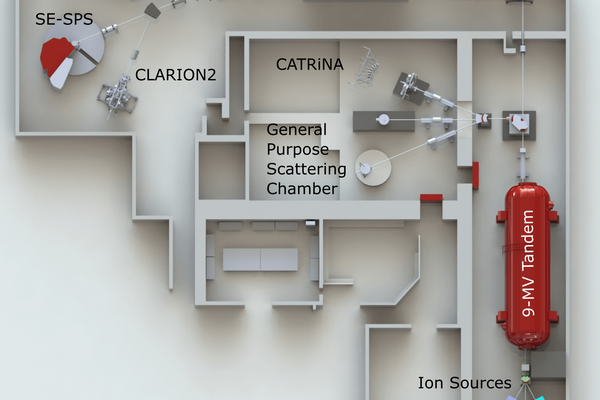
John D. Fox Superconducting Linear Accelerator Laboratory (Florida State University)
The John D. Fox Superconducting Linear Accelerator Laboratory at Florida State University is a busy, teeming place with the radioactive beam facility RESOLUT, the construction of advanced detector systems, such as ANASEN and RESONEUT, and nuclear-spectroscopy setups using Compton-suppressed Clover gamma-ray detectors as well as the Enge Split-Pole magnetic spectrograph. The FSU group is one of the seven founding members of ARUNA. The John D. Fox Lab is also part of the Center for Excellence in Nuclear Training and University-Based Research (CENTAUR), a multi institutional effort from the Department of Energy's National Nuclear Security Administration (DOE/NNSA). CENTAUR fosters basic research in low-energy nuclear physics and workforce development.
Local contact: Prof. Ingo Wiedenhoever (iwiedenhoever@fsu.edu)
-

Student Proton Accelerator Laboratory (Gettysburg College)
The Student Proton Accelerator Laboratory at Gettysburg College centers on a 250-keV Van de Graaff accelerator from High Voltage Engineering with an RF ion source, producing proton beams between 40 and 210 keV with currents up to several microAmps on target. Projects have included proton damage of PDMS, a common satellite coating, and studies of proton energy loss through thin films at low energies. The undergraduate-focused laboratory also gives students opportunities to maintain the accelerator and develop additional capabilities such as feedback stabilization of the dome voltage.
Local contact: Prof. Bret Crawford (bcrawfor@gettysburg.edu)
-
Hope College 1.7-MV Tandem Particle Accelerator
The centerpiece of the Hope College nuclear physics program is a NEC 1.7-MV tandem accelerator that is primarily used to accelerate proton and alpha beams. The facility is instrumented with a rather unique micro-focusing ability making it ideal for studies of proton-induced x-ray and gamma-ray emission as well as Rutherford back-scattering analysis of thin foils. A strong focus is the detection of PFAS in water samples.
Local contact: Prof. Paul DeYoung (deyoung@hope.edu)
-
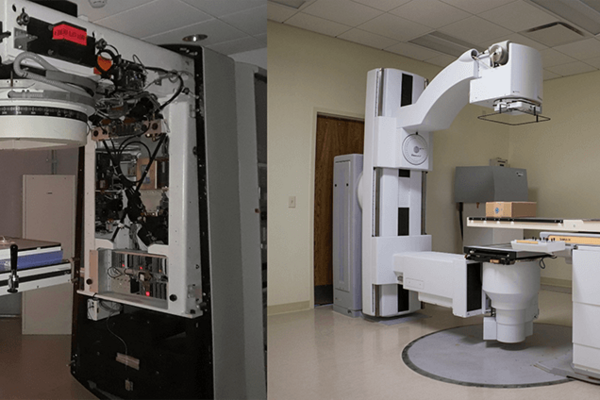
Madison Accelerator Laboratory (James Madison University)
The Madison Accelerator Laboratory (MAL) features a repurposed medical electron linear accelerator (linac) and an X-ray imaging machine. The electron linac at MAL operates in a modulated pulsed regime with 6 µs bursts of electrons at a 200 Hz pulse repetition frequency. It creates beams with electron energies of 5, 7, 8, 10, 12, and 14 MeV and with X-ray beam energies of 6 and 15 MeV. The X-ray photons are produced by directing the electron beam into a tungsten target. MAL’s (40-140 kV) X-ray imaging facility has been repurposed to do research in a wide range of areas – including material science, geology, history, and museum studies. Using a state-of-the-art Carestream HPX-DR digital imager, it allows for routine X-ray 2-D imaging of even large pieces of art down to 100 μm (0.1mm) spatial resolution. 3-D imaging can be done by combining CT-like slices (flat-plane imagery in TIFF format) into 3-D datasets. This can help researchers image and model the detailed internal structure of objects.
Local contact: Prof. L. Adriana Banu (banula@jmu.edu)
-

Edwards Accelerator Laboratory/Institute of Nuclear and Particle Physics (Ohio University)
The John E. Edwards Accelerator Laboratory provides ion beams and the associated detection equipment for the study of nuclear reactions of interest for nuclear structure, nuclear astrophysics, materials science, inertial confinement fusion, nuclear energy, homeland security, and other applications. This research is performed by Ohio University students, faculty, and staff, as well users from other universities and laboratories. The education and training of undergraduate and graduate students is a fundamental mission of the laboratory. The Edwards Accelerator Laboratory is managed by the Department of Physics and Astronomy and is also a part of the Institute for Nuclear and Particle Physics (INPP).
Local contact: Prof. Carl Brune (brune@ohio.edu)
-

Cyclotron Institute (Texas A&M University)
The Texas A&M University Cyclotron Institute, a Department of Energy University Facility, is jointly supported by DOE and the State of Texas and is a major technical and educational resource for the state and the nation. At the Institute, the Texas A&M team focuses on conducting basic research, educating students in accelerator-based science and technology, and providing technical capabilities for a wide variety of applications in space science, materials science, analytical procedures and nuclear medicine. The Cyclotron Institute staff constructed, and now operate, a K500 superconducting cyclotron and its advanced ECR ion sources. Together, these provide a powerful arsenal of intermediate-energy projectiles for use in both fundamental and applied studies. A facility upgrade is now underway to expand the capabilities to accelerate radioactive ion beams. A large complement of sophisticated state-of-the-art detectors and spectrometers provides the associated instrumentation necessary for modern research in the areas of nuclear structure, weak interactions, exotic nuclei, nuclear astrophysics, intermediate-energy reaction dynamics, nuclear thermodynamics, the nuclear equation of state, atomic physics and applied nuclear science.
Local contact: Prof. Sherry J. Yennello (yennello@comp.tamu.edu)
-

Triangle Universities Nuclear Laboratory (Duke University, North Carolina Central University, North Carolina State University, University of North Carolina at Chapel Hill)
The Triangle Universities Nuclear Laboratory, or TUNL, is a U.S. Department of Energy (DOE) Center of Excellence. TUNL is a consortium of 4 universities: Duke University, North Carolina Central University, North Carolina State University, and the University of North Carolina at Chapel Hill. TUNL's mission is to advance the frontiers of nuclear physics and to educate students and young scientists so that they can contribute to society across a wide range of technical fields, including nuclear physics. TUNL's work is conducted by 20 faculty, 24 research scientists and postdocs, 21 staff, 65 graduate students, and about 25 undergraduates.
Local contact: Prof. Calvin Howell (howellc@duke.edu)
-

The Union College Ion Beam Analysis Laboratory
The Union College Ion Beam Analysis Laboratory is an all-undergraduate laboratory located in the Department of Physics and Astronomy, that uses applications of nuclear physics to study environmental pollution problems. Students in the lab use ion-beam analysis techniques as a probe of the elemental makeup of a target. Students routinely perform Proton Induced X-ray Emission (PIXE), Proton Induced Gamma-ray Emission (PIGE), Rutherford Backscattering (RBS), or Elastic Recoil Detection Analysis (ERDA) techniques to analyze soils and sediments, liquid targets and atmospheric aerosol samples.
Local contact: Prof. Scott LaBrake (labrakes@union.edu)
-
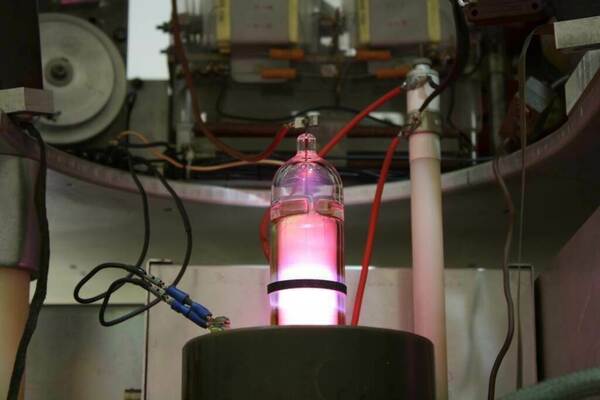
The University of Kentucky Van de Graaff Accelerator Laboratory (University of Kentucky)
The University of Kentucky Van de Graaff Accelerator Laboratory (UKAL) is the premier facility in the United States for studies with fast (MeV) neutrons. The laboratory opened in 1964 and the accelerator underwent a major upgrade in the 1990's. Over the last 5 decades, the facilities have been used for research in nuclear physics, as well as for homeland security and corporate applications.
Local contact: Prof. Erin Peters (fe.peters@uky.edu)
-

Radiation Laboratory (University of Massachusetts Lowell)
The UMass Lowell Radiation Laboratory is a unique facility which houses a 5.5-MV Van de Graaff accelerator, a 1-MW research reactor and a ~100-kilocurie Co-60 gamma-ray source within a single complex. High fluxes of gamma rays and neutrons of energies from thermal to 10 MeV are available from the reactor and 60Co irradiator. Mono-energetic protons, as well as neutrons (using a charge exchange reaction on 7Li), are available from the Van de Graaff accelerator, with a new proton micro-beam station recently commissioned. Under the direction of Professor Partha Chowdhury, the Radiation Laboratory has been used for pure and applied nuclear physics research, for simulating radiation conditions of hostile space environments, for non-destructive testing and analysis, for research and development of radiation resistant electronics and materials, and for research and development of radiation induced modifications to materials.
Local contact: Prof. Andrew Rogers (andrew_rogers@uml.edu)
-

Nuclear Science Laboratory/Institute for Structure and Nuclear Astrophysics (University of Notre Dame)
The Institute for Structure and Nuclear Astrophysics (ISNAP) is a University of Notre Dame Research Center focused on fundamental and applied low energy nuclear physics. ISNAP operates the NSL, which is a mid-sized accelerator facility dedicated to low energy physics studies, which are primarily supported by the US National Science Foundation. The NSL houses three accelerators: the 10 MV FN tandem, the high-current 5U single-ended machine, and the 3 MV 9S tandem that was installed in 2017. The FN is the primary driver of the radioactive beam program, the AMS program, and the newly-developed program in fundamental symmetries. The 5U machine is primarily used for nuclear astrophysics studies along with a newly-commissioned neutron source that will be used for actinide target studies. The newly-installed 9S accelerator is used for applied nuclear physics, including materials analysis and work in environmental chemistry. The NSL also operates CASPAR: The Compact Accelerator System for Performing Astrophysical Research (CASPAR), which is one of three underground nuclear physics laboratories in the world. It serves as a benchmark instrument for the underground accelerator effort of the U.S. nuclear astrophysics community.
Local contact: Prof. Dan Bardayan (danbardayan@nd.edu)
-

Center for Experimental Nuclear Physics and Astrophysics (University of Washington)
The Center for Experimental Nuclear Physics and Astrophysics (CENPA), is a DOE-funded Center of Excellence laboratory and Service Center located at the University of Washington Seattle campus. CENPA has a High Voltage Engineering Corporation Model FN tandem Van de Graaff accelerator purchased in 1966 that has been in continuous use performing a wide variety of accelerator based experiments. In 1995 it was adapted to use an (optional) terminal ion source and a non-inclined tube #3, which enables the accelerator to produce high intensity beams of hydrogen and helium isotopes at energies from 100 keV to 7.5 MeV. CENPA supports a broad program of experimental physics research in fundamental symmetries, neutrinos, muons, axions, and non-Newtonian gravitation. CENPA is home to the Axion Dark Matter eXperiment (ADMX), the Eöt-Wash suite of precision “tabletop” experiments, the unique Project-8 measurement of the neutrino mass, and a precision measurement of the He-6 beta decay spectrum using our 9-MV Tandem Van de Graaff Accelerator.
Local contact: Prof. Alejandro Garcia (agarcia3@uw.edu)
-
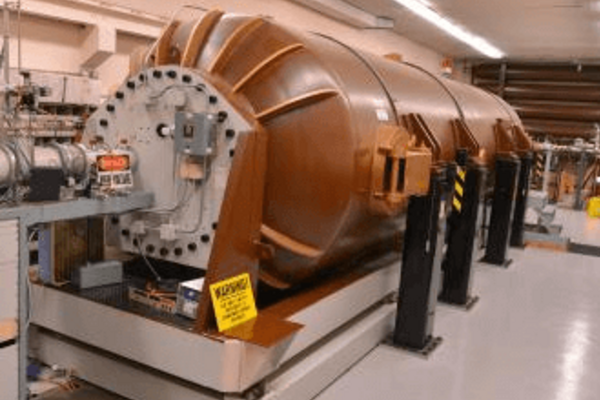
Western Michigan Tandem Van de Graaff Accelerator (Western Michigan University)
The High Voltage Engineering Corporation 6-MV model EN tandem Van de Graaff accelerator at Western Michigan University has been in continuous use for more than 30 years and has been continually upgraded to remain state of the art. Our accelerator facility is an important component in graduate and undergraduate education and in faculty research that receives external grant support. Department of Physics faculty use the accelerator for basic research in atomic, condensed matter, nuclear, nuclear astrophysics, and applied physics.
Local contact: Prof. Zbigniew Chajecki (zbigniew.chajecki@wmich.edu)